Replatforming a seven-figure merch store
A generic Shopify theme wasn't cutting it for a creator merch brand with a 5.45M-subscriber audience. A headless rebuild that helped drive a 250% sales lift.
| Timeline | 2022–2023 |
|---|---|
| My Role | Technical leadership, Design, Front-end engineering |
| Area | Ecommerce, Headless commerce, Brand experience |
| Tech | Next.js, Shopify Storefront API, DatoCMS |
| Link | merch.gamegrumps.com |
Challenge
Game Grumps had a large audience and a store that worked, but the experience was holding the brand back. The storefront was built on Shopify Liquid templates with ad hoc JavaScript layered on top. It was hard to evolve, hard to merchandise well, and too limited for richer campaigns or more distinctive brand expression. For a brand with a playful, highly recognizable personality, the store felt generic.
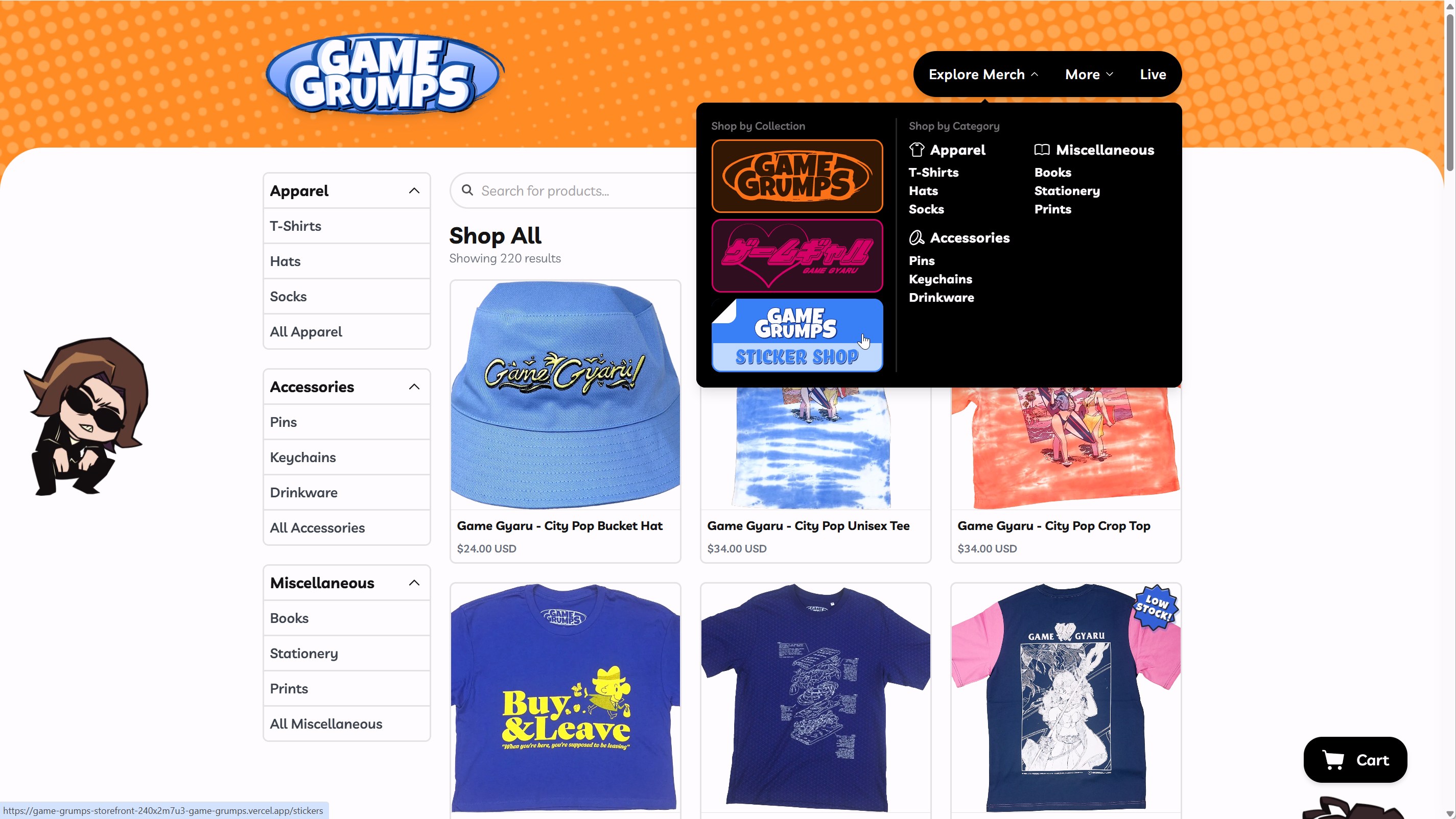
The merch lead wanted something closer to a brand world than a storefront: distinct sub-shops, game-like interactions, and rich media throughout. I was brought in to design and build that version of the store.
Approach
I decided early that a standard Shopify theme was the wrong tool. hemes are good at configurable content sections, but this project needed something more robust to handle app-like shopping flows with distinct branded zones. I went headless with the Shopify's Storefront API and built the front end in Next.js. I chose Next.js over Hydrogen because Hydrogen was still immature at the time, while Next.js gave me a stable path to ship on deadline.
The site was organized around brand pillars — each with its own visual identity and interaction design. I redesigned the homepage around promotions and guided navigation, and I added stronger search and category browsing to make a large SKU catalog easier to explore. For content-heavy campaign sections, I used DatoCMS so the merch team could manage launches and page updates without depending on a developer.
I was equally deliberate about where not to customize. I kept sensitive surfaces like checkout and account flows on Shopify’s native surfaces. Rebuilding them headless would have added complexity, extended the schedule, and produced limited user value.
The timeline was tight. Design started in April with a September launch target. I validated the direction by May, shifted into development, brought in a second developer, and split the work into parallel tracks so we could ship on time within a part-time engagement.
Impact
In the first three months after launch, sales increased 250% year over year. Average order value increased 140% over the same period.
The merch team also gained more direct control over the store. Campaign pages and routine content updates moved into DatoCMS, which reduced the need for developer support on everyday merchandising work.
The codebase was built for handoff.The Next.js architecture was clear and maintainable, making it easier for future developers to step in and continue shipping. I stayed on through 2023 to support the platform as it matured — tuning performance, fixing bugs, and helping launch new campaigns as the merch team relied on it more heavily.